India's Great Solar Rush: A Desert Transformed
How the Rann of Kutch is becoming home to the world's largest solar park
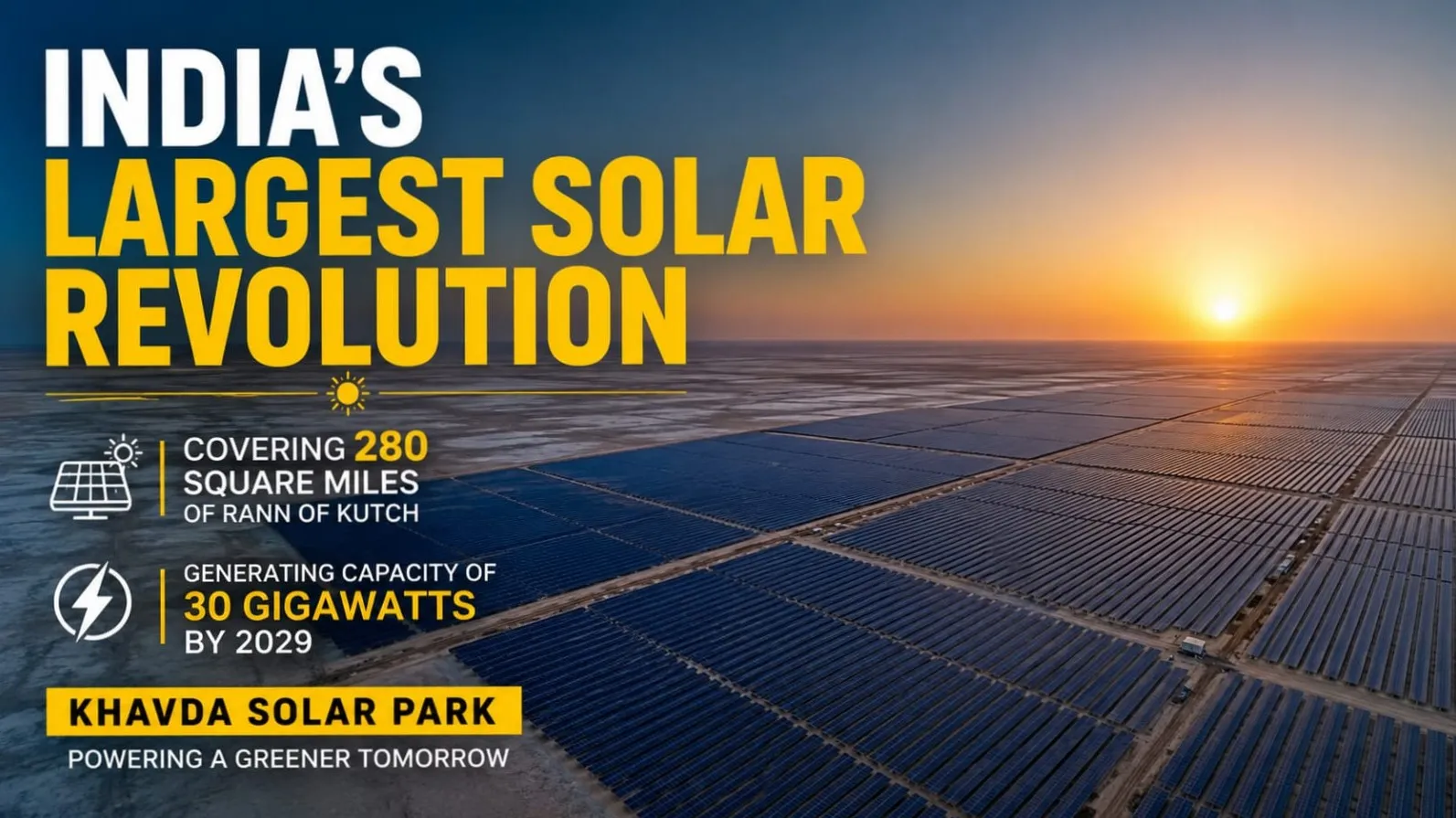
In one of the most inhospitable corners of India, a quiet transformation is underway. The Rann of Kutch, a vast salt desert in Gujarat that stretches to the border with Pakistan, is being blanketed with solar panels at a scale the world has rarely seen. By 2029, an estimated 60 million panels are expected to cover roughly 280 square miles of this arid landscape, forming what will become the world's largest and most powerful solar installation.
The project, known as the Khavda solar park, is designed to generate 30 gigawatts of electricity once complete -- roughly 30 times the output of a typical coal or nuclear power plant, and enough to power an entire country the size of Austria. As of earlier this year, the park already had about 9.4 gigawatts of installed capacity, with construction continuing at a rapid pace. Developed under the Adani Group, Khavda has become a flagship symbol of India's determination to electrify itself through renewable energy.
A Nation Racing Toward the Sun
India's pivot to solar power has accelerated markedly since the 2021 Glasgow climate conference, where the country pledged to expand its non-fossil fuel capacity. That commitment appears to be paying off: for the first time last year, more than half of India's installed electricity generation capacity came from non-fossil sources. The country's abundant sunshine, combined with steadily falling panel costs, has made solar an increasingly attractive answer to its surging power demand, which continues to grow by more than 6 percent annually as the economy expands.
Yet the scale of this ambition brings its own complications. India's electrical grid, much of it aging and undersized for this new era of renewable power, is struggling to keep pace. Large volumes of solar energy captured in Gujarat's western deserts cannot yet be efficiently transmitted to the country's distant urban centers, creating a bottleneck between generation and consumption. Bridging that gap will likely require years of parallel investment in transmission infrastructure alongside the panels themselves.
Betting on Renewables
Khavda is not an isolated effort. Across the country, solar tenders, rooftop programs, and battery storage auctions are multiplying as both public agencies and private developers chase India's clean energy targets. Analysts project India will add more than 40 gigawatts of new solar capacity this fiscal year alone, spanning utility-scale plants, rooftop installations, and off-grid systems for rural areas.
Still, questions remain about how sustainably this growth can continue. Building millions of panels across a fragile desert ecosystem raises concerns about land use and local environmental impact, even as the project promises significant reductions in carbon emissions on a national scale. Whether Khavda ultimately becomes a model for balancing rapid industrialization with environmental stewardship, or a cautionary tale about the strains of scaling too fast, will likely become clearer as the park approaches completion by the end of the decade.
For now, the image of endless rows of solar panels stretching across a salt desert to the edge of a national border stands as a striking symbol of India's energy ambitions -- a country betting its future, quite literally, on the sun.
Source: Yale Environment 360
Keywords