
PV POWER | SOLAR EDUCATION SERIES
Rooftop Solar Panels: A Beginner's Guide
Everything you need to know before going solar
What Are Rooftop Solar Panels?
Rooftop solar panels are photovoltaic (PV) systems installed on the roof of a home, business, or factory to generate electricity directly from sunlight. Rather than relying solely on the power grid, solar panels allow you to produce your own clean, renewable energy — reducing both your electricity bills and your carbon footprint. In India, rooftop solar adoption is growing rapidly, driven by rising electricity costs, government subsidies, and increasing environmental awareness.
How Do They Work?
The process behind rooftop solar is surprisingly straightforward. Here is how sunlight becomes usable electricity in your home or factory:
Step 1 — Sunlight hits the solar panels: Solar panels are made of silicon cells that absorb photons from sunlight and release electrons.
Step 2 — DC electricity is produced: This electron movement creates Direct Current (DC) electricity within the panel.
Step 3 — Inverter converts DC to AC: A solar inverter converts the DC electricity into Alternating Current (AC), which is the standard used by appliances in your home or office.
Step 4 — Power flows to your appliances: The converted electricity powers your fans, ACs, machinery, lights, and more. Any surplus energy can be fed back to the grid (net metering).
Key Benefits of Going Solar
Rooftop solar installations offer advantages for homeowners, businesses, and industrial units alike:
Drastically reduced electricity bills: Many users report savings of 70–95% on their monthly bills.
Government subsidies: The Indian government offers subsidies under the PM Surya Ghar scheme and MNRE programs, making installation more affordable.
Strong return on investment: Most rooftop solar systems pay for themselves within 3–5 years, with panel lifespans of 25+ years.
Environmental impact: A 5 kW solar system can offset approximately 7.5 tonnes of CO₂ per year — equivalent to planting 300+ trees.
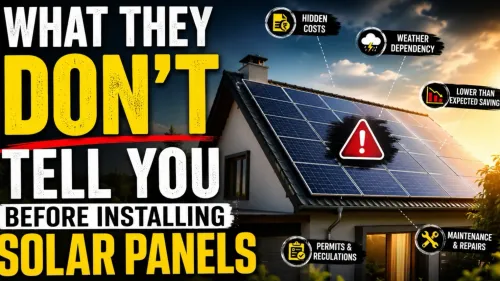
What to Consider Before Installation
Before investing in a rooftop solar system, a few factors are worth evaluating:
Roof space and orientation: South-facing roofs with minimal shading yield the best results. Approximately 10 sq. ft. of space is needed per 100W of capacity.
System size: Size is determined by your average electricity consumption. A typical home uses a 3–5 kW system; factories may require 50 kW or more.
Net metering: Check if your local DISCOM (distribution company) supports net metering so you can earn credits for surplus power exported to the grid.
Conclusion
Rooftop solar is no longer a luxury — it is a smart, accessible investment for anyone looking to cut energy costs, gain energy independence, and contribute to a greener future. With falling panel prices, strong government support, and a proven technology, there has never been a better time to make the switch. Whether you own a home, a shop, or a manufacturing unit, a customised solar solution can deliver real, measurable returns from day one.
Ready to go solar? Contact PV Power today for a free consultation.
@pvpower_official | Instagram: pvpower_official
Keywords