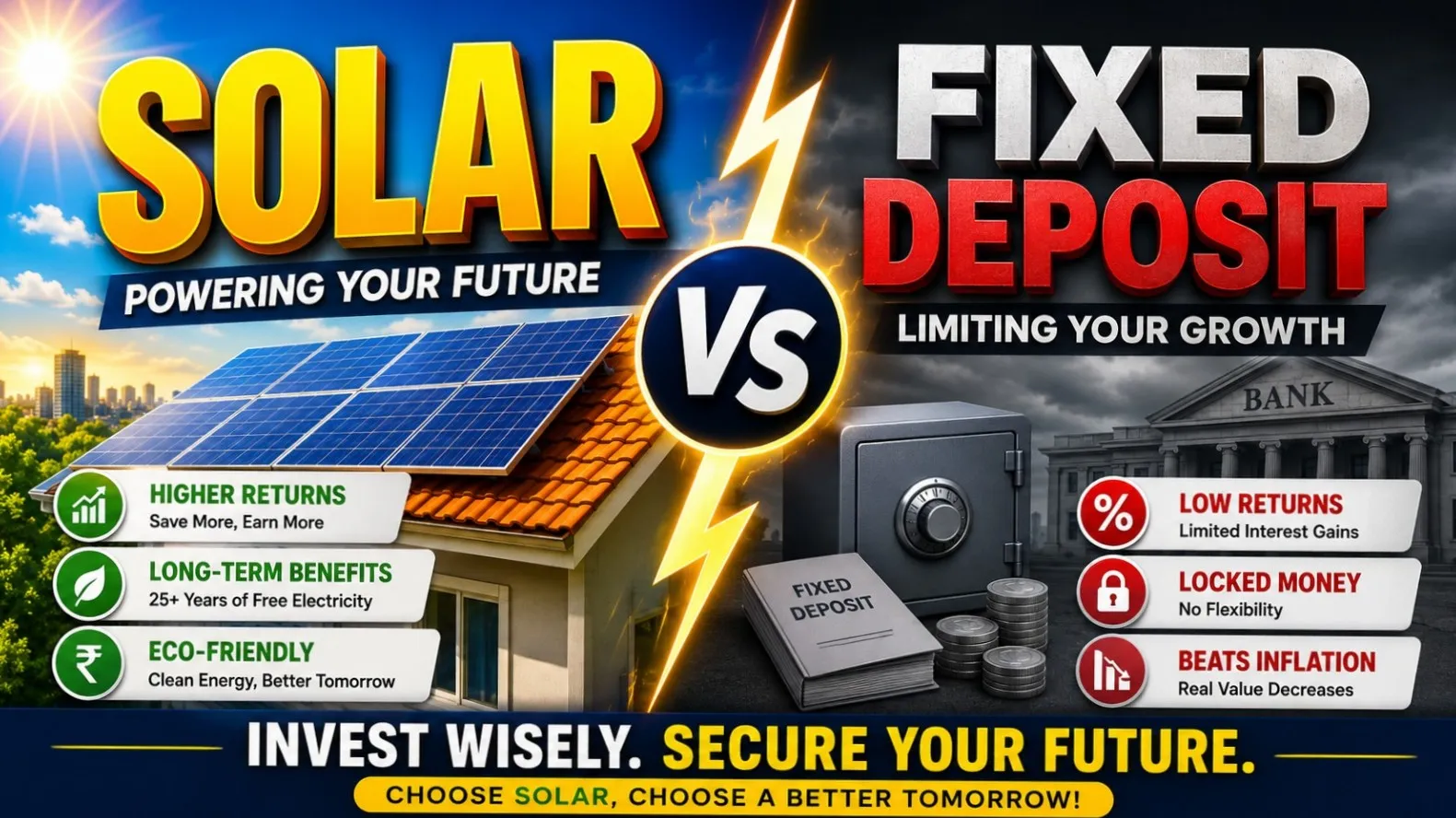
Solar vs Fixed Deposit: Where Should Your Money Really Go?
Every few years, a new investment trend comes along and gets everyone talking at family dinners and WhatsApp groups. Right now, that trend is solar power. But the old favorite, the fixed deposit, still sits quietly in the background, trusted by parents and grandparents for decades. So which one actually makes more sense for your money today? Let's break it down without the jargon.
The Comfort of a Fixed Deposit
There's a reason FDs remain popular. You put in a lump sum, the bank promises a fixed interest rate, and after the tenure ends, you get your money back with the returns added on. No surprises, no market ups and downs, no need to understand anything technical. For someone who simply cannot stomach risk, this predictability is worth a lot.
The catch is that FD returns usually hover between 6 and 7.5 percent a year, and once you account for taxes and inflation, the real growth in your wealth is often thin. Your money is safe, but it isn't really working hard for you. It's more of a parking spot than an investment.
The Growing Appeal of Solar
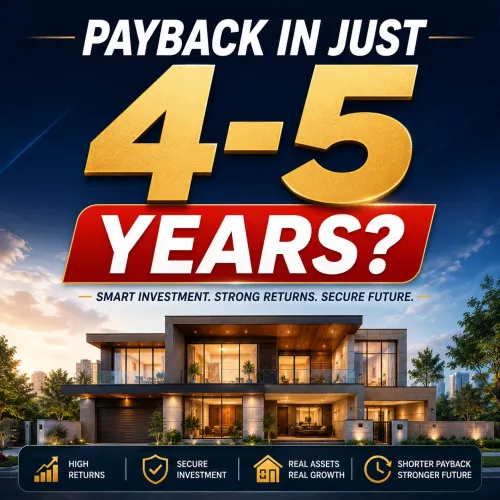
Installing solar panels, whether on your rooftop or through a solar investment scheme, works differently. Instead of earning interest, you save money every month on electricity bills, and in many cases you can even sell surplus power back to the grid. Over five to seven years, the panels typically pay for themselves, and everything they generate after that is essentially free money, or free electricity, for another fifteen to twenty years.
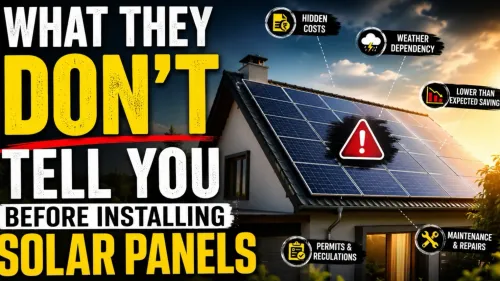
Government subsidies in many regions sweeten the deal further, and there's a genuine feel-good factor in cutting your carbon footprint. But solar isn't without its downsides. The upfront cost is significant, the panels need occasional maintenance, and your actual savings depend heavily on sunlight in your area, the size of your roof, and your household's power consumption. It also isn't liquid; you can't easily convert panels back into cash the way you can break an FD in an emergency.
Comparing Apples to Apples
It helps to think of these as solving two different problems rather than competing for the same job. A fixed deposit is about safety and easy access to your money. Solar is about long-term savings on a recurring expense you'd otherwise pay forever. If you calculate the effective annual return from electricity savings, solar often beats FD interest rates comfortably, sometimes reaching into double digits when subsidies are factored in. But that comparison only holds if you actually own a home, have decent roof space, and plan to stay there long enough to recover the investment.
Someone renting an apartment, or someone who might relocate in a couple of years, would struggle to make solar work. In that case, an FD, or a mix of FDs and other instruments, remains the more sensible choice.
So, Which One Wins?
Honestly, it isn't a fair fight to begin with, because they aren't really rivals. A fixed deposit is a financial product; solar is closer to a home upgrade that happens to pay you back. The smartest approach for most households is not choosing one over the other, but using both. Keep an emergency fund safely tucked away in an FD, and if your living situation allows it, invest in solar panels for the long-term savings and independence from rising electricity rates.
Money doesn't grow well when it's forced into a single box. Some of it should stay liquid and boring, ready for whatever life throws at you. The rest can afford to work a little harder, and for the right household, a sunny rooftop might just be one of the best investments around.
Keywords