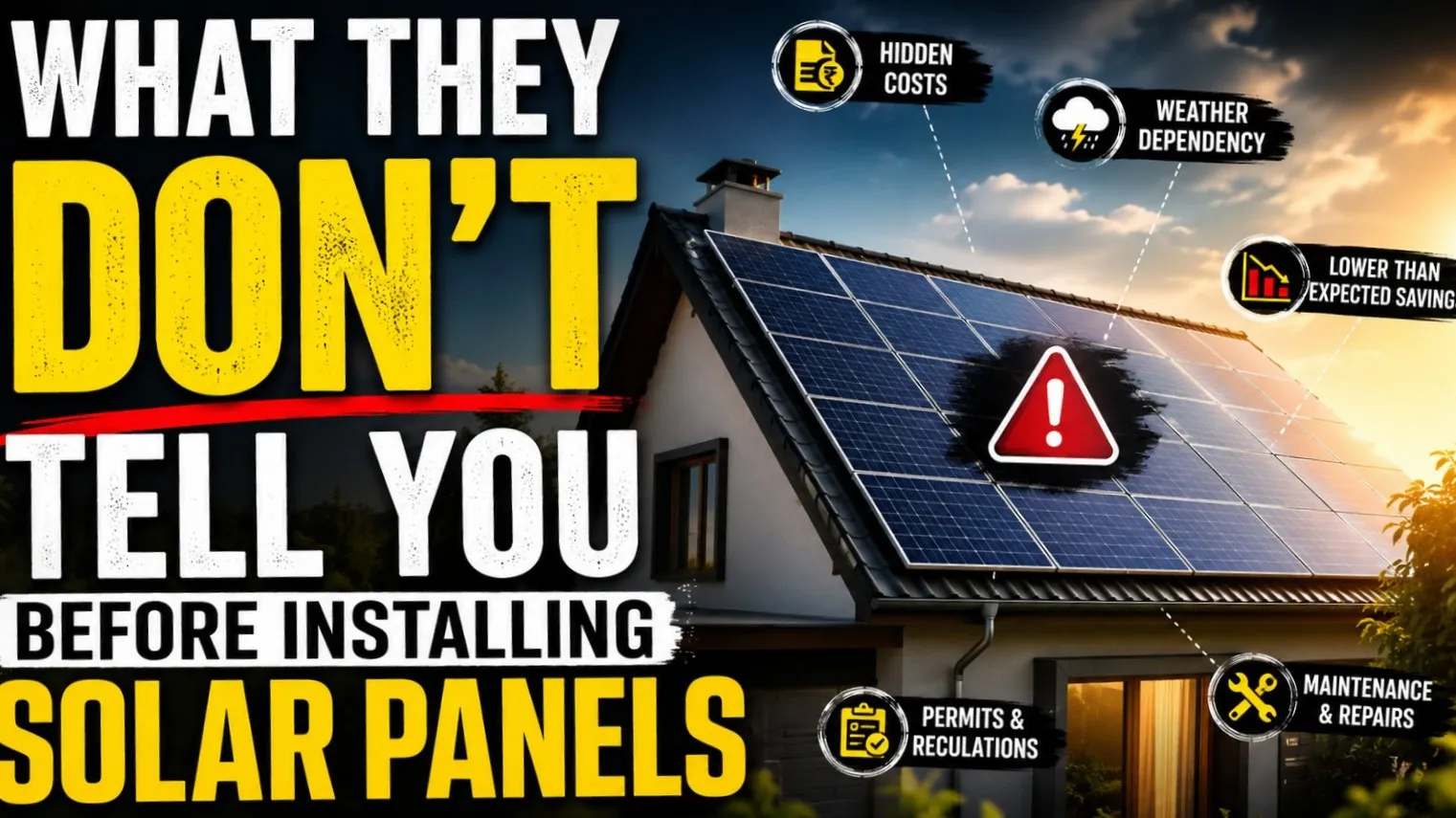
WHAT THEY DON'T TELL YOU
Before Installing Solar Panels
Everyone talks about solar panels like they're a magic switch. You put them on your roof, and suddenly your electricity bill disappears, the sun does all the work, and you become the neighborhood's quiet little hero of clean energy. Nobody mentions the parts that happen before that — the parts that actually matter.
The first thing nobody tells you is that your roof has an opinion. Age, angle, shade from that beautiful old tree you love, even the direction your house faces — all of it decides how much sun you actually get to use. A salesperson will rarely bring this up in detail, because it's not exciting. But it's the difference between panels that pay for themselves in six years and panels that quietly disappoint you for the next twenty.
Then there's the money conversation, which is always more complicated than the glossy brochure suggests. Yes, there are subsidies. Yes, there are tax benefits. But there are also inspection fees, permit costs, wiring upgrades your old electrical panel might suddenly need, and the occasional surprise charge for a part that wasn't in the original quote. Ask for every number in writing. Ask twice.
Installation day is its own small adventure. Workers will be on your roof, drilling and walking around for hours, sometimes days. There will be noise. There might be a temporary mess in your yard or driveway. If you have plants near the house, cover them. If you have a nervous pet, keep them somewhere calm. Nobody warns you about the mild chaos of the actual install — they just show you the finished, sunlit photo afterward.
Here's something that genuinely surprises people: solar panels need to be cleaned. Dust, pollen, bird droppings, and monsoon grime all sit on the surface and slowly reduce how much energy you're producing. It's not a huge chore, but it's a real one, and it's almost never mentioned in the sales pitch.
Your inverter, the quiet box that converts sunlight into usable electricity, is the true heart of the system — and it usually needs replacing before the panels themselves ever do. Panels are often sold with a twenty-five-year promise, but inverters typically last ten to fifteen. That's a cost to plan for, not a nasty surprise for later.
There's also the emotional side that no one prepares you for. The first electricity bill after installation feels like magic. But the process leading up to it — the paperwork, the waiting for approvals, the back-and-forth with installers, the small anxieties about whether you made the right choice — is slower and more human than any advertisement lets on.
None of this means solar panels are a bad decision. For most homes, over time, they genuinely are worth it — for the planet and for your wallet. But going in with open eyes instead of a shiny brochure in your hand changes everything. You stop feeling blindsided by every small bump, because you already knew the bumps were coming.
So before you sign anything, talk to someone who already has panels installed, not just the person trying to sell them to you. Ask about their first year, not just their savings. The sun will keep showing up every single day, quietly, reliably, asking nothing of you. The least you can do is prepare properly for the version of solar that actually exists — sunlight and all its unglamorous, very human paperwork included.
Keywords